Choosing the right window and glass handling equipment comes down to eight key steps: assessing…
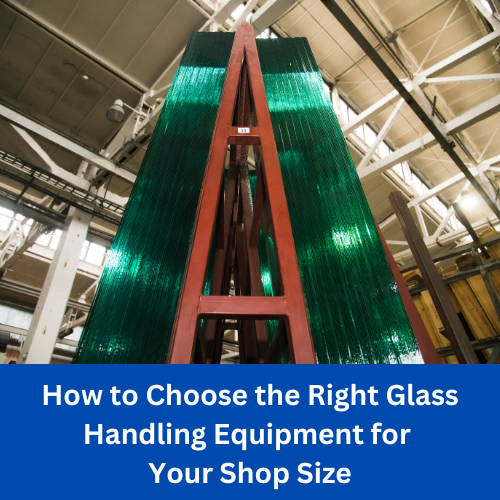
How to Choose the Right Glass Handling Equipment for Your Shop Size
Selecting glass handling equipment is one of the most important capital investments a glass manufacturer will make. The right system improves worker safety, reduces costly glass breakage, increases production throughput, and prepares a facility for future growth. The wrong system can create bottlenecks that affect every stage of production.
At Wakefield Equipment, we’ve worked with glass fabricators ranging from small custom shops to high-volume architectural glass manufacturers. This guide combines that experience into a practical framework to help you choose equipment based on production volume, facility layout, glass size, and long-term business goals.
Why Shop Size Matters When Choosing Glass Handling Equipment
Glass handling equipment is not one size fits all. A piece of equipment that works well in a small custom glass shop can slow down or even create hazards in a high volume production plant. The reverse is also true. A large automated system can be overkill for a small shop with limited floor space and a smaller crew.
Three things change as shop size grows:
- Floor space. Bigger shops have room for larger machines, wider aisles, and dedicated staging areas. Smaller shops need compact, mobile, or foldable equipment.
- Glass volume. The more sheets you move per day, the more your equipment needs to reduce manual lifting and speed up transport.
- Crew size. Fewer workers means equipment needs to do more of the heavy lifting, literally. Larger crews can sometimes rely more on manual tools paired with basic lifting aids.
Matching equipment to these three factors helps protect workers, reduce glass breakage, and keep production costs under control.
Equipment Recommendations by Shop Size
Small Shops
Small shops typically process lower volumes of glass and often work with a small team, sometimes just one or two people per shift. The main goals here are safety, mobility, and low upfront cost.
Recommended equipment includes:
- Manual vacuum lifters for safely lifting and positioning glass without a second worker
- A-frame or L-frame carts for storing and transporting sheets short distances
- Suction cup handles for quick, low-cost handling of smaller panes
- Mobile glass racks that can be moved by hand around a tight shop floor
Small shops should avoid investing in large fixed equipment that takes up permanent floor space. Mobile and manual tools offer flexibility as the business grows.
Mid-Size Shops
Mid-size shops handle a higher daily volume and often work with larger, heavier glass sheets. At this stage, manual lifting alone starts to slow down production and increases the risk of injury.
Recommended equipment includes:
- Powered vacuum lifters that can be mounted on cranes or forklifts
- Traveling Table used to collect and transfer panels or glass to and from racks
- Glass Transport Cart for organized, rolling storage
- Mobile lifting tables to adjust glass height for cutting, tempering, or laminating stations
At this size, it also makes sense to start separating storage, staging, and processing zones. This reduces foot traffic near heavy equipment and improves overall workflow.
Wakefield Expert Insight
One of the most common issues our team sees is manufacturers upgrading production capacity without upgrading their material handling process. As glass sizes increase, companies often continue relying on manual carts that were designed for much lighter loads. The result is slower production, increased employee fatigue, and higher breakage rates. Upgrading lifting equipment before these issues appear is typically far less expensive than reacting after productivity declines.
Large Shops
Large glass manufacturing plants run continuous or near continuous production lines. Equipment here needs to move heavy, large format glass quickly and consistently, often with minimal manual handling.
Recommended equipment includes:
- Overhead bridge cranes with vacuum lifting attachments
- Automated glass handling systems integrated with cutting and tempering lines
- Robotic glass lifters for repetitive, high precision movements
- Fixed vacuum lifting systems built into production stations
Large shops benefit most from equipment that reduces manual touchpoints. Fewer manual lifts means fewer chances for breakage, worker fatigue, and injury.
Key Factors to Consider Before Buying Glass Handling Equipment
Selecting glass handling equipment is a long-term investment that affects every stage of your manufacturing process. While cost is an important consideration, it should not be the only factor driving your decision. The right equipment should improve safety, support production goals, and continue delivering value as your business grows.
Before purchasing new equipment, evaluate the following areas.
1. Glass Size, Weight, and Product Mix
The first step is understanding exactly what materials your equipment will handle. Many manufacturers focus on average glass sizes, but equipment should be selected based on the largest and heaviest products you expect to move.
Consider questions such as:
- What are the maximum dimensions of the glass we process?
- What is the heaviest glass sheet or insulated unit we regularly handle?
- Do we manufacture tempered, laminated, low-E, or oversized architectural glass?
- Will our product mix change over the next three to five years?
For example, a vacuum lifting system designed for standard float glass may not be the best solution for coated or specialty glass products. Likewise, handling oversized architectural glass often requires equipment with greater lifting capacity, larger suction configurations, and enhanced operator control.
Wakefield Expert Insight
One of the most common purchasing mistakes is selecting equipment based on today’s production instead of tomorrow’s opportunities. Choosing a system with additional capacity can prevent expensive equipment upgrades as your business expands.
2. Daily Production Volume
How often your team moves glass is just as important as how much each sheet weighs.
A shop processing 25 sheets each day has different requirements than a manufacturer moving several hundred sheets every shift.
Evaluate:
- Number of sheets processed per shift
- Peak production periods
- Number of material transfers between workstations
- Current production bottlenecks
As production increases, manual handling becomes more time-consuming and physically demanding. Powered lifting systems, transport equipment, and automated handling solutions can reduce repetitive tasks while helping maintain consistent production flow.
If employees regularly stop production to wait for available lifting equipment, it may be time to invest in additional or more capable systems.
3. Facility Layout and Available Space
Even the best equipment will create challenges if it does not fit your facility.
Before selecting equipment, review your production layout and identify how glass moves from receiving through shipping.
Measure:
- Aisle widths
- Door openings
- Ceiling height
- Storage locations
- Loading areas
- Production line spacing
Look for areas where employees make unnecessary trips or manually reposition glass multiple times before fabrication.
Equipment should improve workflow, not create additional obstacles.
Wakefield Expert Insight
Our team often recommends adjusting equipment placement before recommending additional equipment purchases. Small improvements to material flow can significantly reduce travel time and improve productivity.
4. Worker Safety and Ergonomics
Glass handling is physically demanding. Repeated lifting, rotating, and transporting heavy glass increases the risk of injuries, fatigue, and product damage.
Modern handling equipment helps reduce:
- Back and shoulder strain
- Repetitive motion injuries
- Dropped or damaged glass
- Two-person lifting requirements
- Operator fatigue over long shifts
Improving ergonomics does more than protect employees. It also helps maintain consistent productivity throughout the workday and supports employee retention in a competitive labor market.
When evaluating equipment, look for features such as adjustable lifting heights, smooth rotation controls, ergonomic handles, and intuitive operator interfaces.
5. Future Growth and Scalability
Purchasing equipment that only meets today’s production needs may limit future growth.
Ask yourself:
- Will production volumes increase over the next five years?
- Are larger glass products becoming more common?
- Will we add additional fabrication equipment?
- Could automation become part of our long-term strategy?
Scalable equipment often provides better long-term value by allowing manufacturers to expand capabilities without replacing existing systems.
For example, some vacuum lifting systems can be upgraded with additional suction cups or integrated into overhead crane systems as production demands increase.
6. Maintenance Requirements and Equipment Reliability
Reliable equipment minimizes unexpected downtime and keeps production moving.
Before purchasing, understand:
- Recommended maintenance schedules
- Expected service intervals
- Availability of replacement parts
- Warranty coverage
- Technical support options
Preventive maintenance should be simple enough to fit into your existing maintenance program without creating unnecessary downtime.
Working with an equipment supplier that offers responsive service and readily available replacement parts can significantly reduce disruptions when maintenance is required.
7. Integration with Existing Equipment
New handling equipment should complement your existing production process.
Consider how it will work with:
- Cutting tables
- Tempering lines
- Laminating equipment
- Insulating glass production
- Storage systems
- Shipping and loading operations
Poor integration often creates bottlenecks that offset the benefits of new equipment.
A complete workflow evaluation can help ensure new equipment improves efficiency across the entire manufacturing process.
8. Employee Training and Ease of Operation
Even the most advanced equipment cannot improve productivity if operators are not comfortable using it.
When comparing equipment, evaluate:
- Operator training requirements
- Ease of daily operation
- User-friendly controls
- Safety features
- Available documentation
Simple, intuitive systems reduce training time and encourage consistent use throughout the facility.
Partnering with a supplier that provides hands-on training can also improve equipment adoption and reduce the likelihood of operator error.
Total Cost of Ownership
The purchase price is only one part of the investment.
To understand the true value of new equipment, calculate its total cost of ownership by considering:
- Initial purchase price
- Installation costs
- Operator training
- Preventive maintenance
- Replacement parts
- Energy consumption
- Equipment lifespan
- Productivity improvements
- Reduced glass breakage
- Lower workers’ compensation costs
For many manufacturers, the long-term savings from increased efficiency and reduced product damage outweigh the initial investment.
Example
A manufacturer processing 200 glass sheets each day experiences one fewer damaged insulated glass unit each week after upgrading its lifting equipment. If the average replacement cost is $350 per unit, the company saves more than $18,000 annually in reduced product loss alone, without accounting for labor savings or improved production efficiency.
Choosing the Right Equipment Partner
Selecting the right supplier is just as important as selecting the right equipment. Look for a partner that offers more than product recommendations.
An experienced equipment provider should help you:
- Evaluate your production process
- Identify workflow bottlenecks
- Recommend solutions based on your specific operation
- Provide installation support
- Train operators
- Offer ongoing technical service and replacement parts
At Wakefield Equipment, we take a consultative approach to every project. Rather than recommending the same solution for every manufacturer, we work with customers to understand their production goals, facility layout, and future growth plans. This allows us to recommend equipment that improves efficiency today while supporting tomorrow’s expansion.
Common Mistakes to Avoid
- Buying equipment based on today’s needs only. Shops that plan to grow should choose equipment with some extra capacity or the ability to add attachments later.
- Ignoring floor space limitations. Equipment that does not fit your layout will slow down work rather than speed it up.
- Choosing the cheapest option without checking lifting capacity. Underrated equipment is a leading cause of glass breakage and worker injury.
- Skipping operator training. Even the best equipment is only as safe as the person using it. Proper training reduces accidents and extends equipment life.
Why Manufacturers Trust Wakefield Equipment
Wakefield Equipment has helped thousands of glass manufacturers improve safety and production efficiency through custom-engineered handling solutions.
Our specialists evaluate:
- Production flow
- Facility layout
- Glass sizes
- Employee workflows
- Future automation plans
Rather than recommending a standard product, we help manufacturers design a material handling solution that supports long-term growth.
Frequently Asked Questions
What is the best glass handling equipment for a small shop? Manual vacuum lifters, A-frame carts, and mobile glass racks are usually the best fit for small shops. They are affordable, easy to move, and do not require major floor space changes.
When should a shop upgrade to powered glass handling equipment? A shop should consider powered equipment when manual lifting starts slowing down production, when sheet sizes and weights increase, or when worker injuries or strain become more frequent.
How much weight can vacuum lifters handle? Vacuum lifter capacity varies widely by model, ranging from light duty units built for smaller panes to heavy duty industrial lifters built for large format, oversized glass. Always check the manufacturer’s rated capacity before use.
Do large glass manufacturing plants still use manual tools? Yes, in many cases. Even highly automated plants often keep manual tools on hand for smaller jobs, maintenance tasks, or backup situations when automated systems are down.
How do I know what size equipment my shop needs? Base your decision on your largest and heaviest glass sheets, your daily processing volume, and your available floor space. Matching equipment to these three factors is the most reliable way to choose the right size.
Final Thoughts
The right glass handling equipment protects your workers, reduces glass breakage, and keeps production moving at a pace that matches your shop size. Small shops benefit from mobile and manual tools that offer flexibility. Mid-size shops need a mix of powered lifting and organized storage. Large manufacturing plants require automated systems built for speed, precision, and volume.
Wakefield Equipment works with glass manufacturing companies of every size to find handling equipment that fits their space, their volume, and their budget. If you are ready to evaluate your current setup or explore new equipment options, our team can help you find the right fit for your shop.
Related Posts