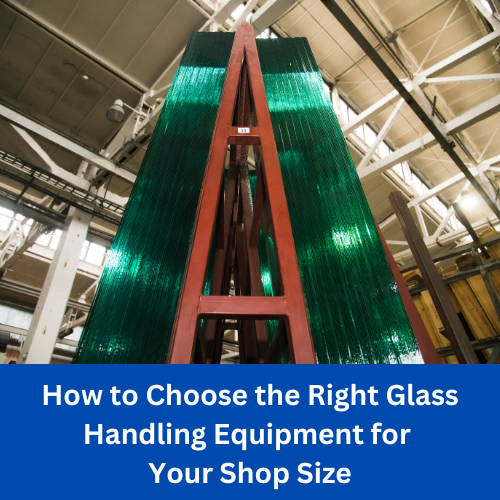
Choosing the right window and glass handling equipment comes down to eight key steps: assessing…
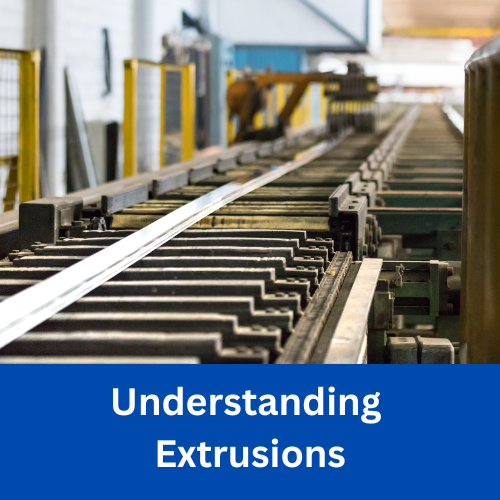
Understanding Extrusions: Materials, Tolerances, and How They Impact Window Performance
Every glass shop has lived this moment: a sash that should glide into place suddenly binds, a frame won’t square, or a profile that looked fine on arrival reveals a twist that throws off the entire assembly. Production slows, operators troubleshoot on the fly, and rework quietly eats into margins. In most cases, the culprit isn’t operator error; it’s extrusion variability. When profiles arrive out of tolerance or become compromised during handling and fabrication, even the best-run fenestration operation struggles to maintain predictable output.
Understanding extrusion materials, tolerances, and how they influence window performance is essential for any manufacturer aiming to reduce scrap, improve throughput, and protect profitability. This guide breaks down the fundamentals while highlighting how modern equipment, such as TigerStop automated measuring systems and Wakefield’s full suite of glass and extrusion handling solutions, helps manufacturers eliminate the inefficiencies that extrusion variability creates.
Why Extrusion Quality Matters More Than Ever
Today’s window systems demand precision. Even small deviations in extrusion geometry can create major downstream issues:
- Sashes that bind or won’t seat
- Hardware misalignment
- Uneven reveals and poor fit
- Seal failures from inconsistent compression
- Increased rework and scrap
- Slower throughput and higher labor costs
As performance standards tighten and customers expect flawless results, extrusion consistency becomes a foundational requirement—not a nice‑to‑have.
Common Extrusion Materials in Fenestration
Vinyl (uPVC) Extrusions
Vinyl is widely used for residential windows due to its thermal performance and cost efficiency.
Strengths:
- Excellent insulation
- Low maintenance
- Highly customizable
Challenges:
- Sensitive to temperature during fabrication
- Can warp or twist if cooled unevenly
- Surface easily damaged without proper handling
Aluminum Extrusions
A staple in commercial systems where strength and rigidity matter.
Strengths:
- High dimensional stability
- Strong structural performance
- Ideal for large spans
Challenges:
- Conducts heat unless thermally broken
- Susceptible to denting
- Requires careful surface protection
Composite & Fiberglass Extrusions
Growing in popularity for their strength and thermal stability.
Strengths:
- Excellent rigidity
- Minimal expansion/contraction
- Long-term durability
Challenges:
- Higher cost
- More brittle under improper handling
- Requires specialized tooling
Extrusion Tolerances: The Hidden Variable Affecting Every Window
Extrusion tolerances define acceptable variation in:
- Wall thickness
- Profile width/height
- Pocket depth
- Screw boss alignment
- Bow, twist, and camber
- Surface flatness
Why Tolerances Drift
Common causes include:
- Die wear
- Inconsistent cooling
- Resin/alloy variation
- Puller tension issues
- Improper storage or transport
Even slight deviations can cascade into assembly issues, performance failures, and costly rework.
How Extrusion Variability Impacts Window Performance
1. Assembly Fit & Finish
Out-of-spec profiles lead to:
- Gaps
- Binding sashes
- Misaligned hardware
- Slower assembly times
2. Structural Integrity
Variability can compromise:
- Load-bearing performance
- Wind resistance
- Impact ratings
3. Thermal & Air/Water Performance
Small deviations affect:
- Thermal breaks
- Weatherstripping compression
- Sealant adhesion
- Air/water infiltration
4. Long-Term Durability
Profiles that start slightly warped often worsen over time, leading to callbacks and warranty claims.
How Better Handling and Fabrication Equipment Reduces Extrusion Problems
Even perfectly manufactured extrusions can become compromised through poor handling or inaccurate cutting. Wakefield Equipment provides solutions that help manufacturers protect profile integrity and maintain consistent output.
Wakefield Handling Solutions
Wakefield’s carts, racks, and conveyors are engineered specifically for fenestration workflows, helping manufacturers:
- Support profiles evenly to prevent bowing
- Reduce manual lifting that causes twist or damage
- Protect surfaces from scratches and dents
- Improve flow between cutting, welding, and assembly
TigerStop: Precision That Eliminates Tolerance Stack-Up
TigerStop automated measuring and positioning systems are a game‑changer for extrusion fabrication. When paired with saws or punch systems, TigerStop helps manufacturers:
- Achieve repeatable, sub‑millimeter accuracy
- Eliminate manual measuring errors
- Reduce scrap caused by miscuts
- Speed up production without sacrificing quality
- Maintain consistency across shifts and operators
For shops dealing with tight tolerances, TigerStop dramatically reduces the variability that leads to assembly issues.
Additional Wakefield Solutions That Strengthen Extrusion Quality
Wakefield also supports extrusion consistency with:
- Roller conveyors that prevent sagging and surface damage
- Material staging racks that keep profiles organized and protected
- Cutting and fabrication support tables that stabilize long extrusions
- Custom carts and dollies designed for safe, efficient movement
When handling and fabrication are controlled, extrusion variability becomes far easier to manage—and window performance becomes far more predictable.
Best Practices for Managing Extrusion Quality
1. Strengthen Incoming Quality Checks
- Measure critical dimensions
- Inspect for bow, twist, and camber
- Verify surface finish
2. Improve Storage & Environmental Control
- Keep profiles level and supported
- Avoid temperature extremes
- Separate materials to prevent damage
3. Use Purpose-Built Handling Equipment
- Reduce manual movement
- Protect surfaces
- Maintain consistent support
4. Automate Cutting & Measuring
- Use TigerStop for precise, repeatable cuts
- Reduce operator variability
- Improve throughput and accuracy
5. Maintain Supplier Feedback Loops
- Share measurement data
- Track trends
- Request die maintenance when needed
Control Your Extrusions, Control Your Output
Extrusion materials and tolerances directly influence window performance, production efficiency, and long-term durability. When manufacturers combine strong quality control with purpose-built handling and precision fabrication equipment, like TigerStop and Wakefield’s full suite of fenestration solutions, they eliminate one of the biggest sources of operational inefficiency.
If you’re looking to strengthen your extrusion handling or improve fabrication accuracy, connect with a Wakefield expert to learn more or schedule a conversation.
Related Posts