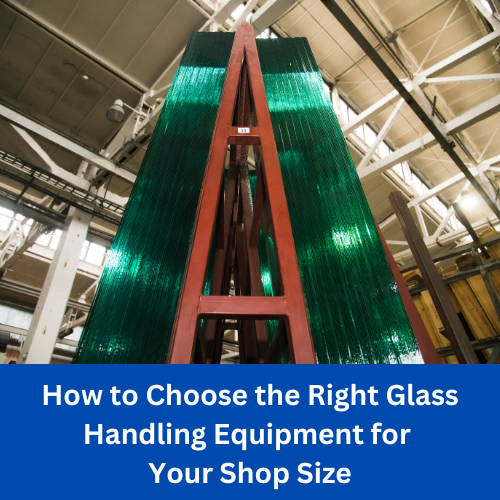
Choosing the right window and glass handling equipment comes down to eight key steps: assessing…

Top Workflow Bottlenecks in Window Fabrication—And How to Fix Them
Window fabrication is a complex, multi‑stage process that depends on precision, timing, and safe material handling. For most fabrication shops, even small inefficiencies can ripple across the entire production line, slowing output, increasing labor costs, and creating unnecessary safety risks. The good news is that most workflow bottlenecks are predictable, preventable, and solvable with the right equipment and layout strategy.
This guide breaks down the most common workflow bottlenecks in window fabrication and explains how to fix them using proven solutions from Wakefield Equipment, a trusted provider of glass handling and material‑flow systems for window and door manufacturers.
- Manual Glass Handling That Slows Down Production
One of the biggest bottlenecks in window fabrication is the amount of manual lifting, flipping, and transporting required to move glass from one station to the next. When workers must lift heavy units by hand—or wait for a second or third person to help—production slows dramatically. A mid‑size shop producing 150–200 units per day may spend several minutes per unit waiting for help to flip or move glass. Over a full shift, this can add up to hours of lost production time.
Why this bottleneck happens
- Glass sizes continue to increase, making manual handling unsafe and inefficient.
- Workers must stop what they’re doing to help with lifts.
- Fatigue leads to slower cycle times and inconsistent quality.
How to fix it
Investing in pneumatic tilt transfer tables, tilt tables, or vacuum lifters allows a single operator to lift, rotate, and position glass safely and quickly. These tools eliminate the need for multi‑person lifts and dramatically reduce downtime between stages.
2. Bottlenecks at the Cutting and IGU Assembly Stations
Cutting and IGU assembly are two of the most labor‑intensive stages in window fabrication. When these stations fall behind, the entire production line backs up.
Why this bottleneck happens
- Operators must manually reposition glass multiple times.
- Limited staging space causes congestion.
- Inconsistent material flow leads to idle time at downstream stations.
How to fix it
- Use tilt tables to transition glass from horizontal to vertical positions without manual flipping.
- Add glass dollies or transport carts to keep material flowing smoothly.
- Create dedicated staging zones to prevent pile‑ups around cutting and assembly stations.
Wakefield Equipment often helps shops redesign these areas to reduce unnecessary movement and keep operators working continuously.
3. Inefficient Shop Layout and Material Flow
Even the best equipment can’t overcome a poor layout. Many glass fabrication shops grow organically adding new stations wherever space is available. Over time, this leads to a disjointed workflow with excessive walking, tight corners, and unsafe traffic patterns. A shop may have its cutting table on one side of the building and its IGU line on the other, forcing workers to push heavy glass long distances multiple times per shift.
Why this bottleneck happens
- Equipment is placed based on available space, not workflow logic.
- Aisles are too narrow for carts or vacuum lifters.
- Operators must backtrack or cross paths repeatedly.
How to fix it
- Map your current workflow and identify unnecessary movement.
- Reorganize stations so glass moves in a straight, logical path.
- Use custom carts, A‑frames, and dollies to streamline transport.
Wakefield Equipment frequently assists shops with layout planning to ensure equipment placement supports efficient material flow.
4. Multi‑Person Tasks That Should Be Single‑Operator
Tasks that require two or more workers create built‑in delays. If one person is busy, the entire process pauses. This is especially common in glazing, loading, and packaging.
Why this bottleneck happens
- Manual lifts require multiple people.
- Oversized units are difficult to maneuver without equipment.
- Operators must wait for help before proceeding.
How to fix it
- Introduce vacuum lifters or pneumatic assist devices to allow one operator to handle large units.
- Add roller conveyors or powered tables to reduce manual repositioning.
- Standardize processes so operators can work independently whenever possible.
5. Staging and Storage Congestion
Poor staging practices create hidden bottlenecks that slow production and increase breakage risk. When finished units or raw materials pile up, operators lose space to work efficiently.
Why this bottleneck happens
- Inadequate storage for in‑process units.
- Carts or racks placed too close to production stations.
- Lack of standardized staging zones.
How to fix it
- Use dedicated A‑frames, transport racks, and staging carts to keep units organized.
- Create clear pathways for material movement.
- Establish staging zones that match your daily production volume.
Wakefield Equipment offers a range of storage and staging solutions designed specifically for window and glass shops
6. Safety Incidents That Interrupt Production
Safety issues don’t just put workers at risk—they also create immediate workflow disruptions. A single injury or breakage event can halt production for hours.
Why this bottleneck happens
- Manual lifting increases injury risk.
- Tight spaces lead to collisions or dropped units.
- Fatigue contributes to mistakes.
How to fix it
- Replace manual lifts with pneumatic equipment.
- Improve layout to reduce tight turns and blind spots.
- Train operators on safe equipment use and material handling.
Fixing Bottlenecks Starts With the Right Equipment and Layout
Most workflow bottlenecks in window fabrication stem from the same root causes: manual handling, inefficient layouts, multi‑person tasks, and inconsistent material flow. The good news is that each of these challenges can be solved with the right combination of equipment, training, and shop design.
Wakefield Equipment specializes in helping mid‑size window fabrication shops eliminate bottlenecks and build safer, more efficient production lines. Whether you need pneumatic lift tables, tilt tables, vacuum lifters, or custom material‑flow solutions, the right upgrade can transform your workflow and unlock new production capacity.
Related Posts