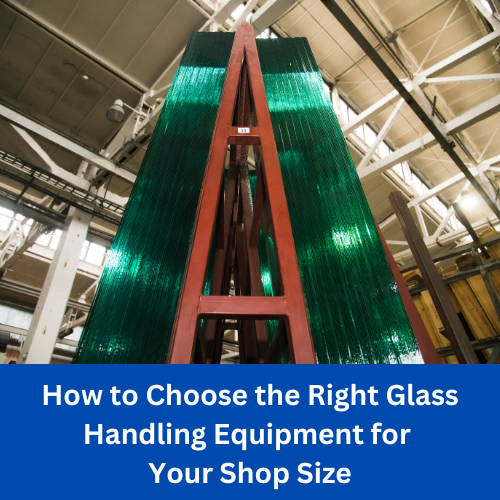
Choosing the right window and glass handling equipment comes down to eight key steps: assessing…

ROI of Glass Handling Equipment: Cost–Benefit Guide
Investing in the right glass handling equipment can completely change the economics of a glass fabrication or window manufacturing shop. The right racks, dollies, conveyors, and vacuum lifters don’t just make production smoother, they reduce labor costs, minimize waste, and boost productivity, resulting in a measurable return on investment (ROI) within months.
In this guide, we’ll break down how to calculate ROI for specific types of glass handling equipment, using Wakefield Equipment’s industry-leading products as real examples.
Why Glass Handling Equipment Pays Off
Glass handling remains one of the most labor-intensive, risk-prone areas in window and door production. Every time a lite is manually lifted or a sash is hand-carried across the floor, you’re burning labor dollars and risking breakage.
By integrating purpose-built handling solutions from Wakefield Equipment, manufacturers can streamline workflows, protect materials, and lower total cost per unit produced.
The main ROI drivers include:
- Labor savings: Fewer workers needed to move and position glass
- Reduced material waste: Less glass breakage and rework
- Increased productivity: More throughput per shift
- Improved safety: Fewer injuries and downtime
Product-Specific ROI Examples
Let’s look at two common Wakefield Equipment product categories and how each delivers a measurable financial return.
1. Glass Racks and Dollies: Reduced Material Waste
Product Example: Wakefield Harp Racks and IG Dollies
Breakage and scratches from poor storage and manual handling can eat up margins fast, especially with large, custom glass panels. Wakefield’s harp racks and dollies are designed to hold glass vertically and secure it in motion, cutting down on costly handling damage.
ROI Calculation Example:
| Factor | Estimate |
| Cost of harp rack set | $6,000 |
| Breakage reduction | From 3% to 1% on $300,000 annual glass usage = $6,000 saved |
| Labor saved | 0.25 hour/day reduction = $1,875/year |
| Productivity gain | $2,000/year (faster loading/unloading) |
Total Annual Benefit: $9,875
Payback Period: $6,000 ÷ $9,875 = 0.6 years (≈7 months)
In this example, the racks pay for themselves in under a year and protect valuable glass inventory while improving shop organization.
2. Assembly Tables and Conveyors: Productivity Multiplier
Product Example: Wakefield Adjustable Assembly Tables & Rotator Conveyors
Automating movement between cutting, cleaning, and assembly stations reduces bottlenecks. Adjustable tables improve ergonomics, speed up alignment, and reduce the chance of damage during manual repositioning.
ROI Calculation Example:
| Factor | Estimate |
| Installed cost (2 tables + conveyor section) | $18,000 |
| Labor saved | 1 hour/day (2 operators) = $15,600/year |
| Productivity gain | 10% throughput increase = $20,000/year |
| Material waste reduction | $2,000/year |
Total Annual Benefit: $37,600
Payback Period: $18,000 ÷ $37,600 = 0.48 years (≈6 months)
By smoothing workflow and reducing downtime between processes, the investment pays back rapidly and scales with volume.
How to Calculate Your ROI
Every shop’s numbers will vary based on your unique product customizations and costs. You can calculate your ROI using this simple formula:
ROI (%) = (Annual Net Benefit ÷ Total Investment) × 100
or
Payback Period (years) = Total Investment ÷ Annual Net Benefit
To make your math realistic:
- Track current labor hours spent on moving or handling glass.
- Calculate breakage losses (scrapped lites × cost per unit).
- Estimate productivity gain (additional units per shift × profit per unit).
- Use conservative numbers — better to underestimate savings than overpromise.
- Factor in safety — fewer injuries can reduce workers’ compensation premiums and unplanned absences.
Need help? Schedule an ROI assessment with our team of experts.
Wakefield Equipment: Engineered for ROI
Wakefield Equipment’s full line of glass handling, storage, and assembly solutions is designed for maximum return and minimal downtime. Key product categories include:
- Racks & Dollies: Secure transport of glass, sash, and frames
- Tables & Conveyors: Smooth, ergonomic assembly and inspection
- Custom Solutions: Engineered systems for window and door manufacturers
Wakefield’s equipment is built to last, with heavy-duty welded steel construction, high-capacity casters, and configurable designs that adapt to your workflow. That longevity compounds your ROI year after year.
The Hidden ROI: Safety and Retention
An often-overlooked benefit is operator satisfaction. When workers no longer struggle with heavy glass or awkward manual moves, fatigue and injury risk drop dramatically. Fewer injuries mean fewer claims, less turnover, and more consistent production output.
A safer, more efficient environment helps attract and retain skilled employees — an intangible but critical ROI factor for any manufacturing business.
Putting It All Together: Example Payback Summary
| Equipment Type | Cost | Annual Savings | Payback | Key ROI Drivers |
| Harp Racks | $6,000 | $9,875 | 7 months | Reduced Breakage |
| Assembly Table + Conveyor | $18,000 | $37,600 | 6 months | Productivity |
Across product categories, typical ROI ranges from 6–12 months, meaning your investment pays back quickly and keeps delivering for years.
Why ROI Matters More Than Ever
With labor costs climbing and margins tightening, glass manufacturers can’t afford inefficiency. By upgrading manual workflows with Wakefield Equipment’s glass handling systems, you unlock measurable cost savings and a safer, more productive environment.
Whether you start with a tilt table to reduce strain, add custom dollies to protect materials, or implement roller conveyors to boost throughput, each step moves your shop toward higher profitability.
Ready to Calculate Your ROI?
Wakefield Equipment’s team can help you model real-world savings and recommend the best combination of equipment for your specific operation. Reach out and let us help design a glass manufacturing floor that is optimized.
Related Posts